


A guide to collection software in 2023
You run a company – VSE, SME, ETI – and you’re experiencing late payments? payment delays? Have you noticed that cash flow requires extra effort. An effort you hadn’t suspected until now. You also notice that the time between billing and payment can become a real brake on your company’s progress. It can even threaten the health of your cash flow. A considerable expenditure of energy. You’ve tried a number of solutions, including Excel software. Solutions that clearly haven’t been successful enough. You try to develop in-house processes for efficiently collect customer receivables. This problem is affecting more and more companies, so you’re not alone.
Aston AI has written a guide to help you discover a SaaS solution: debt collection software. To help you choose between the three best solutions on the market.
What is the situation regarding late payments in France?
In this area, France has always been a good pupil, unlike its European neighbors. In 2018, for example, it took between 10.5 and 11.5 days of delay per payment. This is in contrast to the much higher European average of around 13 days. In 2020, on the other hand, France saw a peak in delays in line with the European average of around 14 days. The year 2021 was marked by a sharper decline and an almost normal return to around 12 days.

Information from the European Payment Report speak for themselves. The COVID-19 crisis has had a real impact on companies. According to the 2022 report on revenues and disruption management, 40% of French companies believe they are more vulnerable than before March 2020. This compares with 49% of companies on average in Europe. Only 21% of French respondents say the covid crisis has strengthened them. Covid has therefore set a precedent.
This trend is also reflected in payment behaviour:
- 83% of those surveyed said they had been asked to extend payment terms over the past 12 months.
- 77% have agreed to extend payment terms over the past 12 months.
After the health crisis payment delays have therefore become a major issue. In 2022 in France, more than one company in two will agree to accept longer payment terms to avoid the risk of bankruptcy.
The direct consequence of this is an increase of almost 50% in the number of days in arrears. In France, companies take an average of 55 days to settle their invoices.
This analysis of the European Payment Report several priorities:
– Improving receivables management and customer risk,
– The strengthening liquidity,
– and the reassessment of contracts with partners.
French companies have improved their receivables management processes. 76% of them claim to be concentrating on the management of older receivables.
The use of collection software is one of the solutions used to collect past-due receivables.
What is collection software?
Collection software was created to reduce the threat of late payment. late payments. They automate customer debt collection to maintain business growth. In addition to this main function, the software also tracks all payments in real time. Manage collection files. Calculate interest and penalties. Generate reports on collection performance.
The market is divided between cloud and on-premise solutions. Some are aimed at large enterprises (VSEs), small and medium-sized enterprises (SMEs), or both. As for end-users, there are many. Some are financial institutions, others collection agencies, or private companies.
The study, compiled by Mordor Intelligenceestimates that collection software will record a compound annual growth rate by 9.7% between 2023 and 2026. This projection is due in particular to the growing number of receivables.
What are the key concepts in debt collection?
Your company may well be interested in this collection solution. To verify this, we’ll take a look at all the concepts optimized by the software.
DSO :
DSO represents the average customer payment time. It measures the number of days it takes for a customer to pay an invoice issued by your company.
- A average customer payment term of 30 days is considered normal.
- A average customer payment term exceeding 60 days is a risk factor for a company’s cash flow.
How to Calculate and Optimize Your DSO?

Billing :
Every invoice has a payment term. This indicates the number of days that the customer must not exceed before paying the invoice. France has four typical payment terms:
- Cash payment: In this case, your customer pays the full amount on delivery or on completion of a service.
- Payment after receipt : the situation is similar to that of cash payment, with one exception. You grant your customer a seven-day grace period.
- The default payment : here the payment term is extended to 30 days. If you have forgotten to mention the payment period on your invoice, it will be applied by default.
- Negotiated or special payment: your customer has 45 or even 60 days to pay the invoice amount.
Late Payments: How to Calculate and Bill Them?

Customer risk :
It represents the failure of one or more customers to pay their invoices on time. To protect the company from a possible cash flow shortfall, or worse, from going out of business, customer risk management must be carried out both upstream and downstream from the signing of each new contract. Customer risk management covers :
- Late payments,
- Accounts receivable,
- Unpaid bills,
Customer Risk Management: How to Operate Effectively?

Customer follow-up:
This is a vital function for improving working capital requirements. Customer dunning considerably reduces delays. It enables you to keep your customers informed of upcoming payment deadlines. However, there are a few rules to follow to ensure effective dunning:
- Customize messages,
- Rank the importance of the messages,
- Keep track of all customers,
- Simplify the payment process,
Optimizing Customer Follow-ups

The payment link:
When a customer has to pay a bill, and is slow to do so, it’s essential to do everything possible to simplify matters. One way of doing this is to set up a payment link from which the customer can settle the bill using a bank card. This saves time and friction.
Credit management:
Straight from the United States, it represents the management of customer receivables and is essentially aimed at monitoring collections. This management system creates a customer history. From this, a company can score customers. This is quite practical, as it allows energy to be distributed to the right place. Visit Credit Management covers:
- Negotiation of payment plans for collections,
- Customer reminder management,
- Out-of-court collection management,
- Follow-up on payment disputes,
- Customer evaluation,
Indicators for credit management

Amicable collection:
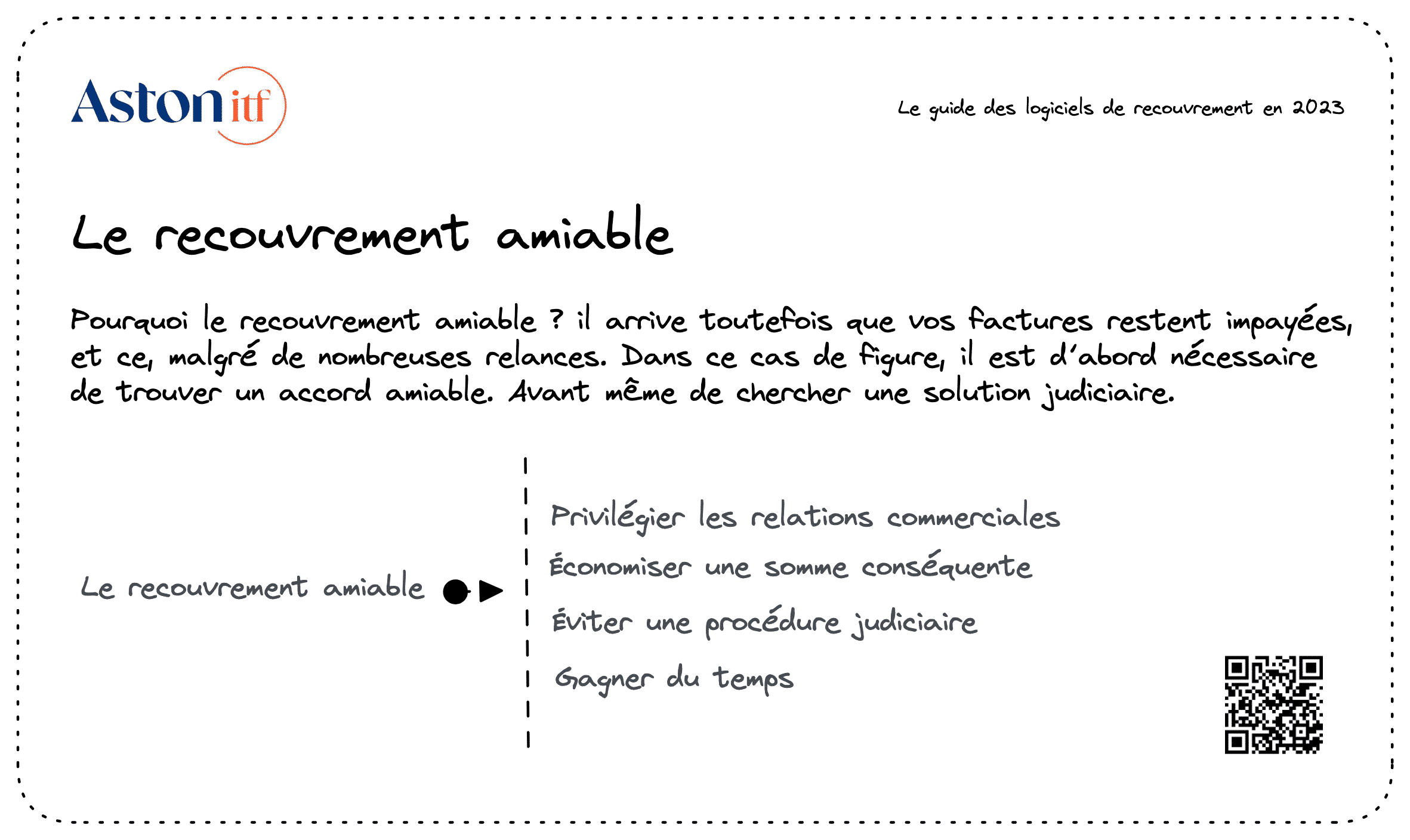
Sometimes, however, your invoices remain unpaid, despite numerous reminders. In such cases, the first step is to reach an amicable agreement. Even before seeking a legal solution. Out-of-court settlements make it possible to :
- Give priority to commercial relationships,
- Save a substantial amount of money,
- Avoid legal proceedings,
- Save time,
Amicable debt collection in the professional sector
What are the benefits of collection software?
Saving time:
The time employees devote to collecting a company’s customer receivables is very important. Collection software makes this task easier. By automating the process.
Various automatic reminder scenarios can be set up. You no longer need to devote additional resources to dealing with overdue payments. Simply determine the number of steps for each customized scenario.
Reducing overdue payments:
You’ll be dealing with a wide variety of customers. That’s why it’s crucial to identify at-risk customers. They are easily identified by the software.
Based on this classification, you can draw up a personalized reminder plan. Encouraging them to take early action to meet their commitments.
By setting up automatic reminders, you can significantly reduce the number of insolvencies.
Shorter payment terms :
Non-payment problems can be solved by offering customers the option of paying online.
Customers will find it easier to pay online. This helps reduce payment times.
Improving customer relations:
Customized reminder plans offer opportunities to inform your customers.
Every customer needs to feel involved in your various follow-ups. With personalized messages, every customer will feel valued by your company.
Data centralization :
The software allows you to collect a customer file in one place.
What are the key features of debt collection software?
Focused on automating activities, collection software offers multiple advantages for companies: cost savings, time savings, infallible processes, etc.
The key features of collection software are :
– customer file,
– dashboard,
– online payment,
– email reporting,
– forecasting cash receipts,
– automated dunning scenarios,
The dashboard :
Collection software isn’t just a tool for automating reminders. It must also be used to monitor outstanding receivables.
The customer file :
Sound cash management requires simple access to information on payer profiles.
Forecasting cash receipts :
For good management of company finances, it is essential to have a clear view of future payments.
Automated dunning scenarios :
This feature automates a company’s dunning activities, saving time for its associates.
Email reporting :
Email reporting enables rapid transmission of information, and information sharing between all company departments.
Online payment :
The online payment system reduces payment times. By simplifying the payment process, customers are more likely to settle their invoices on first demand.
Our answers to your questions
How can collections software help reduce DSO?
As we have seen, DSO represents the average average time to customer payment. Collection software optimizes DSO through automated invoice tracking. Each invoice is dunned before and after the payment date. Several scenarios are available. You set the parameters for the various available reminders. The platform does the rest by sending reminders.
Using collection software can considerably reduce the time spent on customer follow-up, as well as the average time taken to pay customers.
How can collection software improve a company’s cash management process?
Cash management is a key area for any company. Good management will have a positive impact on working capital requirements. Poor management, on the other hand, can lead to significant cash shortfalls, putting the company in difficulty.
By reducing late payments, collection software enables you to recover cash more quickly. And thus avoid cash shortages.
You have a platform where the cash management process is centralized.
How can collection software help avoid late payments?
Most late payments are due to inattentiveness on the part of the corporate customer. Sending automated messages helps to correct the problem. By notifying the customer of forthcoming deadlines.
How can collection software help manage remote payments?
SaaS and on-premise collection solutions are totally paperless. They therefore facilitate all remote payments.
How can collection software help improve your company’s cash flow?
By reducing late payments, collection software increases the speed of cash inflows. You gain up to 30% more cash.
What are the 3 best collection software packages on the market?
Aston AI :

Presentation:
ASTON AI was founded in 2011. The company, crowned Fintech of the Year in 2015, has transformed the CRM industry in a decade by offering an efficient, simple, comprehensive and innovative platform. ASTON AI’s solutions benefit from ten years of uninterrupted technological progress and a dedicated in-house digital R&D department.
Monthly subscription :
- from €195/month with 1 month free
Features :
- Customer reminders :
- Planning and scenario,
- Automation,
- Customization,
- Multi-channel (e-mail, SMS, simple and registered mail, telephone),
- Dashboard :
- Customer outstandings in real time,
- Customer risk analysis,
- Anticipation of collections,
- Credit Management:
- Litigation follow-up,
- DSO follow-up,
- Customer Scoring,
- Geographical cross-referencing of sales and credit risk,
- Customer portal :
- Billing :
- Collaborative platform :
- Online payment platform :
- Payment management,
- Revenue optimization,
- Fractional payment Btob and BtoC,
- Anticipation of cash receipts,
- Marketplace :
- Outsourcing services :
Clearnox:

Presentation:
Clearnox enables companies to optimize the follow-up, dunning and payment of their customers’ invoices. The company solves a major problem for companies: how to get their customer invoices paid simply and quickly.
Monthly subscription :
- Monthly subscription not indicated
Features :
- Dynamic monitoring of customer receivables
- Dashboards
- Detailed customer view
- Grouped email reminders
- Customized follow-up by scenario
- Dunning by criteria
- Advance notice / reminder / thank you
- Multi-company consolidated view
- Email reporting
- Multi-channel follow-up (e-mail, mail, telephone, other media)
- Display settings (Languages / Currency format / Date format / Time zone…)
- Cash target
- Bad debt scoring
- Flag clients and timeline
- Promises to pay
- Grouped PDF relaunch
- Part selection in scenarios
- Reporting and filtering by salesperson
- Exporting tables
- Email reminder automation
- Advanced management of access rights / roles
- Dispute management
- Business analysis
- Collection team management
- Advanced dunning level management
- Multi-currency dunning
- Scheduled full export
- Multi-contact management
- Email reminder automation
- Customize dunning levels
My DSO Manager :

Presentation:
My DSO Manager was born out of the realization that companies are financially penalized by late payments because they don’t have a high-performance Credit Management solution to reduce them. The aim is to make credit management and debt collection software available to companies of all sizes, from SMEs to major international groups.
Monthly subscription :
- Monthly subscription from €299/month.
Features
- Follow-up
- Screenplay,
- Agenda,
- Historical background,
- Automation,
- Customer commitment
- Smartphone application
- Integration of late payment penalties
- Collaborative platform
- Real-time monitoring of customer accounts
- Customer behavior analysis
- Controlling customer risk
- Currency management


